

Manufacturing became more advanced, retailers raised their expectations and consumers were offered an ever-wider choice.
Behind the apparently simple act of picking up lunch was an increasingly complex industry involving manufacturers, ingredient suppliers, packaging businesses, equipment companies, distributors, retailers and many specialist service providers.
The Association grew with it.
Raising standards
Technical standards and food safety remained at the heart of its work.
Codes of Practice, factory auditing and industry guidance helped establish expectations across the sector, giving members practical support while encouraging confidence in the products reaching consumers.
As legislation and regulation became more complex, the ability to share expertise became increasingly valuable.
The Association could bring technical specialists together, engage with organisations outside the industry and help businesses understand what changing requirements meant in practice.
That role has continued to develop through initiatives including Assured Advice and collaborative technical work with organisations such as Campden BRI.
Rather than every company having to tackle every issue alone, the industry had a forum through which common problems could be addressed collectively.
Giving the industry a voice
The Association's representative role grew too.
Decisions made by government, regulators and other organisations could have significant consequences for businesses throughout the supply chain. A collective industry voice provided an opportunity to explain those consequences and contribute practical experience to discussions about policy and regulation.
At the same time, the sandwich itself had become a remarkably high-profile product.
The industry found itself appearing increasingly in the national media, sometimes celebrating its success and sometimes being called upon to explain the realities behind the headlines.
The Association became a point of contact between the industry and the outside world – a role that Association Director Jim Winship would perform on television, radio and in the national press on numerous occasions.
Creating a community
Alongside the serious business of standards and representation, the Association continued to bring the industry together.
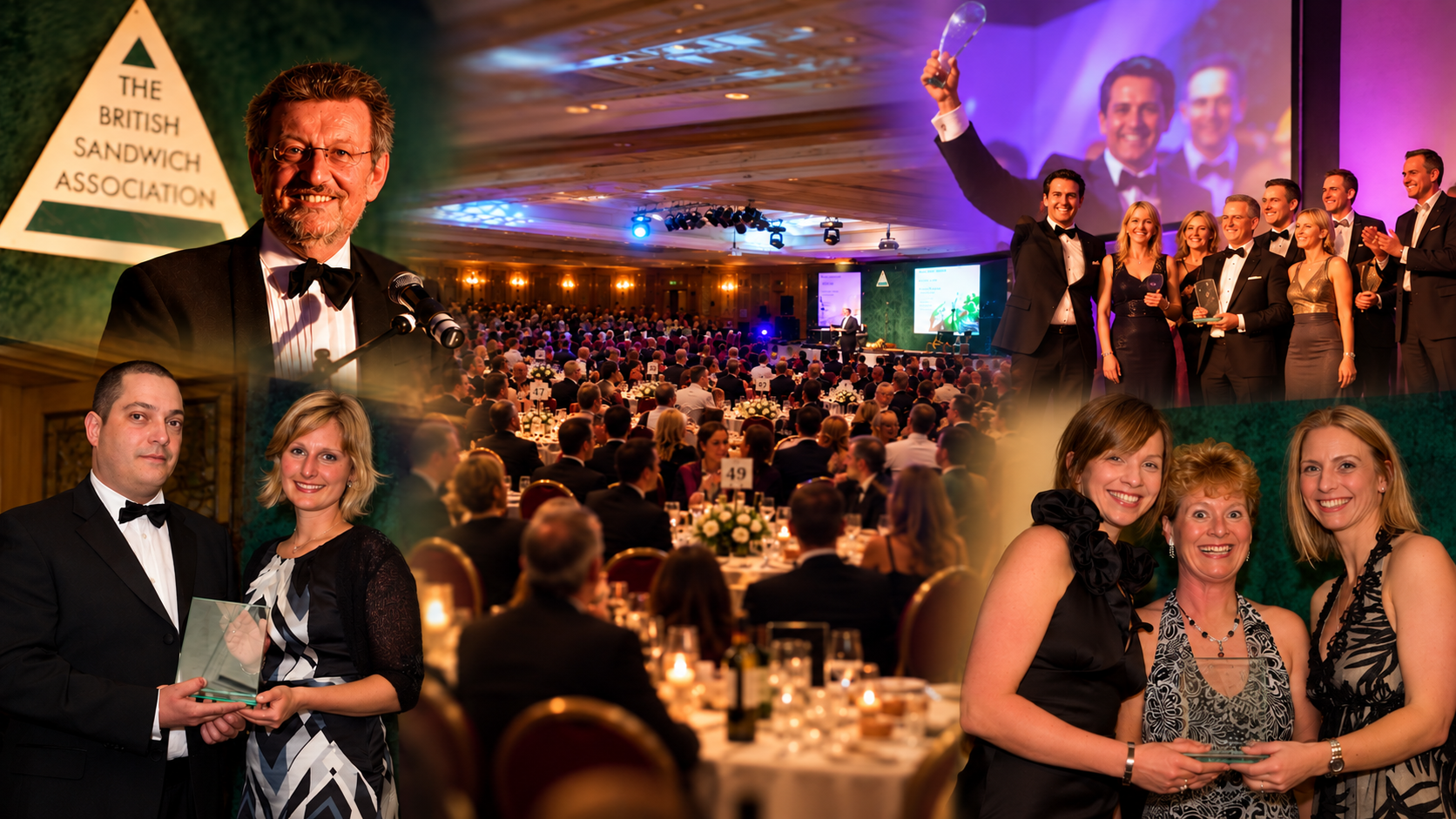
British Sandwich Week became an annual opportunity to celebrate one of Britain's favourite foods, while the Sammies developed into a major fixture in the industry's calendar.
The awards recognised far more than products. They celebrated manufacturers, retailers, suppliers, designers, innovators and the individuals whose work was helping move the sector forward.
Competitions encouraged creativity. Events created connections. Publications shared ideas and expertise.
Together they helped turn a collection of companies working in the same market into something much closer to an industry community.
But while the sandwich remained at its heart, something significant was happening around it.
Consumers were changing the way they ate.
And the neat definition of a "sandwich industry" was becoming increasingly difficult to maintain.